About the project
The Oyen 2 Project, is a ground solar project developed by Universal Kraft Canada Renewables, located approximately 14.5 km north west of the Town of Oyen, Alberta, in Special Area No. 3.
In development since middle 2022, the project with consist of almost 360,000 solar panels that will produce up to 162 MWac. The energy produced, capable to power approximately 110,000 homes, will be connected to the Alberta Interconnected Electric System (AIES).
The Project is wholly located on privately owned, cultivated land with a strong solar resource, characteristic of Alberta, and will generate clean energy over its 30+ year lifetime.
Key figures
Ground solar
System type
2.5 Million Anual
Property taxes
110,000
Powered homes
+120
Direct and indirect jobs
Q3 2024
Ready to build
Project benefits
We strive to be a good neighbour, and work closely with the community to identify areas of opportunity and concern. The Project will have many community benefits, including the following:
Local Employment: The Project will create 120 construction jobs direct, and approximately 20 full time jobs indirectly during construction, creating opportunities for local individuals and businesses. During operations, the Project will provide 2 permanent full-time jobs.
Local Economic Boost: Local businesses will experience increased activity due to the spin-off opportunities created by the Project during development, construction, and operations.
Property Taxes: The Project will pay 2.5 Million annual in property taxes to the County, resulting in financial benefits to the community.
Clean Energy Generation: The Project will generate emissions-free electricity for approximately 110,000 homes.
Project Components
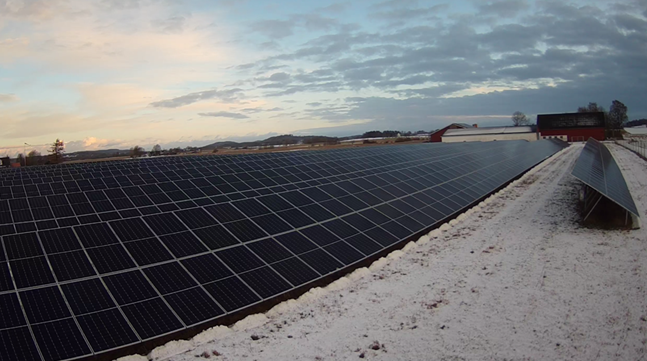
Solar Panel Modules
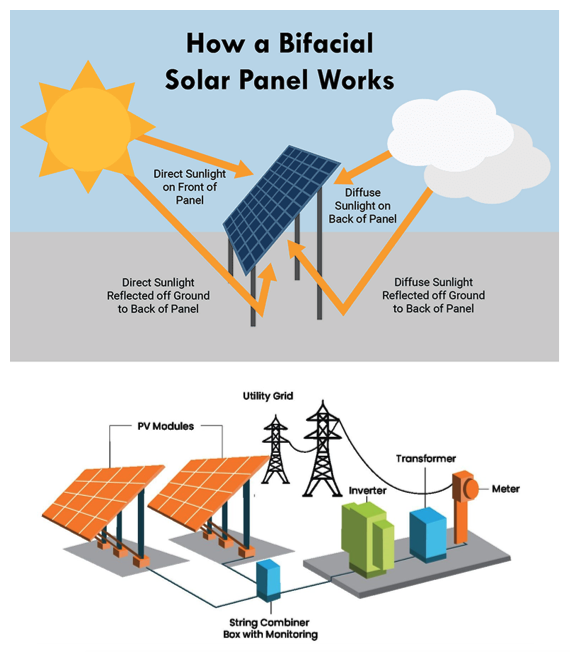
- Bifacial solar photovoltaic (PV) modules are double-sided and transform sunlight into electrical energy on both its front and back sides.
- Single-axis tracker systems follow the path of the sun to maximize electricity production.
Inverter stations and step-up transformers - Inverters are electrical devices that convert direct current (DC) produced by the PV panels to alternating current (AC) used on the grid.
- Transformers are electrical equipment that increase or decrease the voltage within the solar PV facility.
- Underground collector lines of 34.5 kilovolt (kV) will be used to connect inverter/transformer stations.
The Project is located approximately
14.5 km north west of the Town of Oyen
FAQS
What is the technology used to harness energy from the sun?
The sun’s rays are collected through solar panels. The most common panels are made with aluminum frames containing small blue or black squares. These squares are the silicon solar cells that are linked together to form a circuit. The energy generated by the panels is in the form of direct current (DC). However, DC cannot be used to power homes directly. Therefore, the generated power is directed to a power inverter to convert the DC into alternating current (AC). This AC voltage is then transmitted to the substation and the electricity grid, ultimately providing power to homes or businesses.
Is it possible to recycle solar panels?
Solar panels can be redeployed and reused without ending up in landfills. The Alberta Recycling Management Authority (ARMA) collects solar panels for free and tests their performance. Even panels that are not working optimally can be sent to municipalities or community members for reuse, such as on ice fishing huts, where needs are less demanding.
If reuse is not possible, recycling is the According to the Canadian Renewable Energy Association, up to 90% of the mass of a solar panel – including metals and glass – can be recycled. ARMA accepts solar panels for free and sends them to be recycled in the U.S. Toronto-based EDF Renewables has partnered with SOLARCYCLE in Texas and Arizona for recycling. Sunset Renewables in Alberta is working to create a secondary market for solar panels and establish a circular economy center.
Can leachate or toxic metals leak from solar panels while in use?
No leaks can occur when the solar panels are in use, only when panels are broken down into small pieces, during recycling for example. Almost 100% of the global solar panel market contains crystalline silicon or cadmium telluride panels, not the commonly referenced heavy metals like arsenic, gallium and germanium. While trace amounts of lead may exist, they should be carefully managed during the decommissioning and recycling of panels.
Can solar panels create a heat island effect?
According to a study by Center of Life Cycle Analysis of Columbia University, although the temperature in the solar farm area can rise significantly on warm days, analysis of 18 months of detailed data showed that on most days, the solar array was completely cooled at night. Therefore it is unlikely that a heat island effect could occur. The simulations also showed that the access roads between solar fields contribute to substantial cooling. As a result, the increased size of solar farms should not significantly affect the temperature of the surrounding areas.
What are the additional benefits of using solar panels?
Solar panels provide a clean energy alternative to environmentally damaging oil and coal, capable of powering 110,000 homes each year. Oyen -2 project can conserve 863 billion liters of water over its 30-year lifespan, equivalent to 13 years of water consumption for the city of Edmonton, and save approximately $5.3 billion in water costs.
Are Solar panels resilient to strong weather conditions?
Yes, solar panels are built to withstand hail to an extent. Quality solar panels are equipped with a thick layer of laminated tempered glass, providing protection against substantial impact. The ability to withstand hail depends on the manufacturer, with solar panels typically designed to endure hail with diameters between one to two inches. Before installing solar panels, it’s advisable to research different models and check for industry-wide ratings.
Two common solar panel ratings to consider are UL 61730 and IEC 61730, which assess a solar panel’s durability during hailstorms. Panels that pass either or both tests can endure hailstorms with diameters between one to three inches, traveling at speeds under 88.3 mph. The robust glass cover protecting the inner workings of the solar panel is engineered to withstand significant hail impact. Manufacturers often conduct tests, rating many solar panels to withstand hail up to an inch in diameter, falling at approximately 50 miles per hour.
Is it possible to ranch under solar panels?
No, it is not possible to ranch under solar panels. However, a sustainable option for vegetation maintenance around and under the panels is small livestock grazing, such as sheep. According to Agrivoltaics Canada, this practice can bring benefits for solar farm owners and local farmers by lowering costs associated with managing vegetation growth and generating additional revenue for farmers.
Do renewables make the energy price go up?
Increased generation capacity, whether from natural gas, wind, or solar sources, results in higher reliability and affordability. An augmented energy supply tends to drive prices down and should alleviate strain during peak load events, positively impacting consumer bills. The utilization of energy generated by solar farms not only enhances energy security but also creates new jobs, promotes regional development, and contributes to solving various environmental problems. The Alberta Utilities Commission’s (AUC) responsibility is to guarantee cost efficiency and reliable service to the public, and this is considered in the approval of any project, be it in Oil & Gas or Renewable Energy.
Who is responsible for the weed and vegetation management?
UKCR recognizes the importance of controlling weeds and vegetation on project lands to ensure a smooth operation of solar projects, reduce costs, and prevent growth that could impact equipment or shade solar panels. As part of its AUC application, UKCR will create a weed management plan within the environmental protection plan. UKCR will comply with the Weed Control Act to manage noxious weeds and address local nuisance weeds using best management practices, similar to those used by farmers.
How many jobs will this project create?
The project will necessitate a workforce of up to 200 individuals during construction, encompassing positions like surveyors, heavy equipment operators, electrical and mechanical contractors, as well as equipment transportation and hauling personnel. We prioritize employing local labor whenever feasible. Once operational, only a small number of full-time workers will be required, ideally sourced locally for sustained operations. UKCR offers training opportunities for aspiring individuals interested in renewable energy construction.
More information
Download the documents below to know more about the project
Oyen 2 Solar Project Open House
Universal Kraft Canada Renewables is organizing a community open house in Oyen, on June 4th, to present more details about the project.
We are committed to engaging landowners, public stakeholders
and members of the local community.
We look forward to discussing the Project with you.
Share your questions with us
Oyen 2 Solar Project is a development by Universal Kraft Canada Renewables (UKCR), a Joint Venture between Universal Kraft Canada Inc. and Korkia.
With offices in Calgary and Edmonton, UKCR’s global approach with local delivery is shaping driving green economic growth in Alberta and beyond.


Contact us at [email protected]
- All rights reserved
- Universal Kraft Canada Renewables